
Serial Cable Replacement
Extend compatible RS232 or RS485 data across a wireless link, accounting for timing, framing, throughput and bidirectional behaviour.
Connecting PLCs, instruments, controllers and remote assets when wired communication is difficult, expensive or impractical.
Whether connecting two PLCs across a plant, integrating remote field instruments or transferring telemetry to a central control room, URVI can help define the right communication architecture for the application.
Industrial wireless is not a single product. Reliable implementation depends on distance, line of sight, radio environment, data rate, protocols, operating conditions, power supply and system criticality.
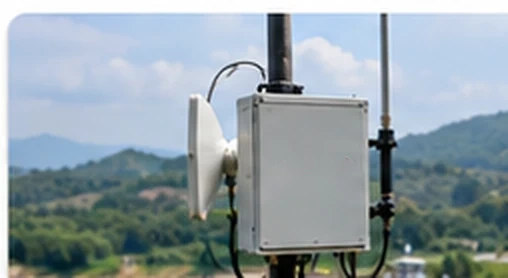 APPLICATION-LED WIRELESS SYSTEMS
Communication solutions selected and engineered for each use case.
Extend compatible RS232 or RS485 data across a wireless link, accounting for timing, framing, throughput and bidirectional behaviour.
Application-specific RF and LoRa solutions for low-throughput telemetry where distance and power constraints matter.
Point-to-point and point-to-multipoint links between network-enabled devices, PLC gateways and supervisory systems.
Combine wireless bridges with gateways, PLCs, RTUs, Modbus devices and remote monitoring infrastructure.
Illustrative two-site bidirectional data link; the final design depends on the existing device interfaces and protocols.
Engineering note: Some protocols require specific response timing or gateway behaviour. Range and performance cannot be guaranteed from distance alone; a link survey and equipment selection are required.
A practical starting point for reviewing your existing installation.
| Design parameter | Common options | What URVI evaluates |
|---|---|---|
| Device interface | RS232, RS485, Ethernet | Electrical interface, baud rate, duplex mode, cable pinout and isolation requirements |
| Data protocol | Modbus RTU, Modbus TCP, proprietary serial traffic | Packet framing, response timing, gateway compatibility and polling arrangements |
| Wireless transport | LoRa, industrial Wi-Fi, application-specific RF links | Frequency legality, line of sight, bandwidth, throughput and interference |
| Network arrangement | Point-to-point, point-to-multipoint | Number of sites, addressing, collision handling and expansion needs |
| Installation conditions | Indoor, outdoor, remote field sites | Enclosure protection, lightning protection, grounding, power and antenna placement |
| System criticality | Monitoring, supervisory control, process data | Fail-safe requirements, latency, availability and necessary wired fallback |
These are engineering design considerations, not specifications of a single URVI product.
Communication between existing PLCs, motor controllers and supervisory systems in separate buildings or plant areas.
Remote pump stations, reservoir telemetry, monitoring points and supervisory status reporting.
Remote sensor networks and instrument data collection without long field cabling.
Networking between physically separated facilities with suitable RF paths and deployment conditions.
Identify endpoints, interface types, data flow, distances and site constraints.
Choose RF technology, radio hardware, antennas, protocol handling and topology.
Configure devices and verify connectivity, timing and operational requirements.
Provide configuration records, system diagrams and commissioning information.
For plant retrofits, the important question is not simply whether a radio works over a stated distance. The existing PLC interface, message timing, site conditions and consequences of communication loss define a usable industrial wireless solution.
RS485 defines the electrical interface; Modbus RTU defines how request and response messages are structured. A wireless serial bridge can extend an existing Modbus RTU link, but it must preserve framing, addressing and timeout expectations.
A serial-to-Wi-Fi gateway joins a serial port to an IP network. Verify RS485 two-wire or four-wire mode, serial settings, TCP operating mode, isolation, network security and gateway buffer behavior before commissioning.
Low-throughput, tolerant telemetry may suit an application-specific LoRa design. For higher traffic volumes or Ethernet networking, an appropriately designed outdoor point-to-point Wi-Fi bridge may be a better fit. Assess spectrum rules and link budgets.
Often, yes. The correct approach depends on their protocol, baud rate, traffic pattern, response-time requirements and the available RF path. A transparent serial bridge may work, while other cases require gateways or additional engineering.
Range is site-specific. Antenna height and gain, line of sight, frequency band, modulation, link budget, interference and regulations all affect achievable distance. A credible design starts with those inputs rather than a universal range claim.
Point-to-multipoint architectures are possible with suitable equipment and communication protocol design. Network capacity, node addressing, polling times and channel use must be reviewed.
Wireless links must not be assumed safe for emergency stopping or other safety-critical functions. Such functions require a risk assessment and appropriately engineered, standards-compliant safety architecture.
Provide a few core engineering details and we can begin assessing the appropriate solution.
URVI Research Labs Pvt. Ltd.
info@urvirl.in
+91-989-002-5949 / +91-920-930-5949
Complete the form on this page. Your requirements will be submitted directly to URVI, without opening an email application.